Testing with Penterep maximizes work efficiency by combining automated and manual testing. The use of the platform minimizes the amount of external tools used or integrates them in a suitable way.
The user initiates a penetration test using the Penterep platform by setting up a new project, assigning workers to it with specific roles, and selecting a checklist that defines the type of environment to be tested and the standard against which the tests are to be performed.
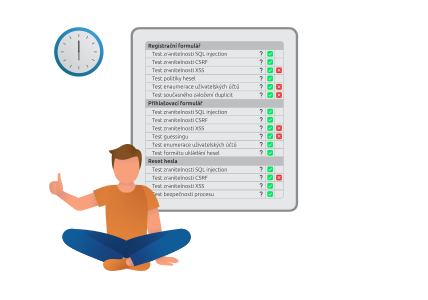
The tester then runs automated testing that independently scans the environment under test to provide an estimate of the project's workload. At the same time, those test cases that can be executed using automated testing will be automatically executed. During this testing, the Penterep platform is interfaced with PenterepTools. After the automated test is finished, the platform provides a clear indication of which tests have been executed and which are waiting for manual execution. The tester's task is to perform the manual tests, a list of which will be provided by the platform based on interactive checklists. These checklists automatically adapt to previous findings as the work progresses and guide the tester through each step. Each individual test contains detailed instructions on how the test can be performed. This makes it possible to involve novice, less experienced testers in the testing process, so that they are also learning as they work.
If a tester finds a vulnerability while working, they only need to select it from the list. Each vulnerability is already described in detail, including the impact and recommendations for remediation. This allows the tester to focus on the actual testing.
If the tester needs to take notes or screenshots while working, they can save them to specific tests directly in the platform. All important information is thus stored clearly structured in one place, which boosts clarity and efficiency of work and at the same time facilitates teamwork.
Thanks to the fact that the platform provides clear information about which tests have already been executed and which are still pending, it is possible to involve multiple testers in testing at the same time. They can thus collaborate effectively without redundant work or losing track of which components have already been tested. Team collaboration also allows you to involve in projects developers or other IT staff responsible for fixing the vulnerabilities found. They are notified of any findings and can start working on remediation immediately. If needed, these workers can use the discussion option available in the platform for each finding to communicate with the testers.
Managers can also be added to the team to monitor the performance and success of individual workers. This makes it easy to spot problematic workers whose performance does not match the standard. For example, a management output might look like this.
Once the work is done, all you have to do is generate a final report, which is a matter of a single click with the Penterep platform. Also, you will receive the report in the language of your choice. This means no need for costly translation of the report into another language should a different language version be required. You can see what a final report can look like here. All outputs can be freely customized using templates to suit your own needs.
With the Penterep platform, testing is much more effective than it would be with fully automated testing, and at the same time much more efficient compared to manual testing.

If you would like to increase the efficiency of manual testing by combining it with automated tools, gain better control of individual projects, improve teamwork or make final reports as simple as possible to create, consider whether the Penterep platform could be just the right solution to help you. The Penterep platform is packed with a number of great features that can make the work of penetration testers, and not just penetration testers, much easier and more efficient.